

Digital Transformation 2.0 Approach
Building a scalable, integrated framework to align systems, foster innovation, and drive MOI's leadership in global investment through data and AI-driven solutions.
Design Methodology
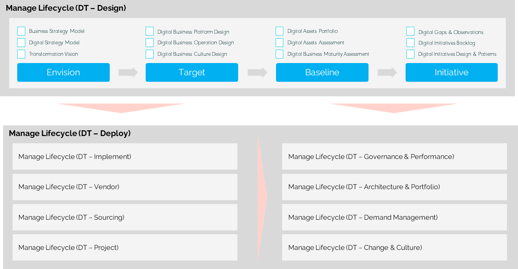
The DQ DT2.0 framework, takes a structured approach to defining the design for the realisation of the DBP practice within the organisation.
Envision: Define the aspirations and positioning of the DBP practice within the organisation.
Target: Design of the target platform and operating model to support the DBP practice.
Baseline: Assess the current state of the practice against the target to identify the maturity gaps.
Initiative: Define the roadmap and blueprints required to realise the target state for the practice.
Deploy Methodology (Implement)
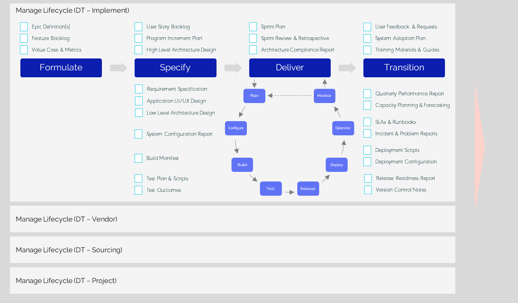
The DQ DT2.0 framework, takes a structured approach to executing the implementation for the activation of the practice within the organisation.
Formulate: Define the solution's scope through actionable epics and features.
Prepare: Develop detailed user stories and system architecture to guide the implementation.
Deliver: Configure and develop the system in an iterative manner with continuous releases.
Transition: Enable users adoption to onboard and activate the solution operations.
Deploy Methodology (Oversight)
The DQ DT2.0 framework, takes a structured approach to overseeing the realisation of the practice, against the defined design for the practice.
Sourcing: Ensure effective vendor identification, evaluation, and selection to realise the practice.
Vendor Management: Monitor performance and ensure deliverables meet quality standards.
Delivery: Oversee timelines, milestones, and adherence to quality benchmarks.
Architecture: Validate and align solution designs with scalable and compliant frameworks.
Change Management: Facilitate adoption, address gaps, and ensure seamless transition.
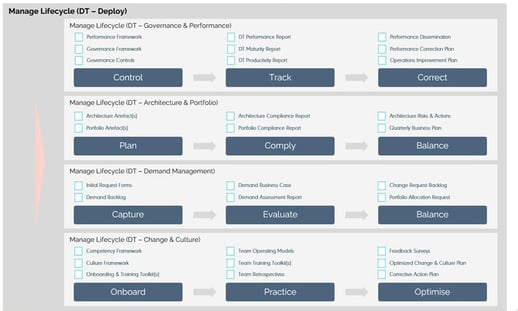
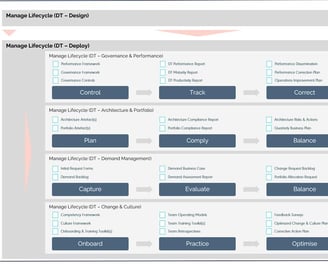
Blueprint for DT2.0 Approach
Empowering seamless integration, scalability, and AI-driven innovation for MoI’s data transformation